
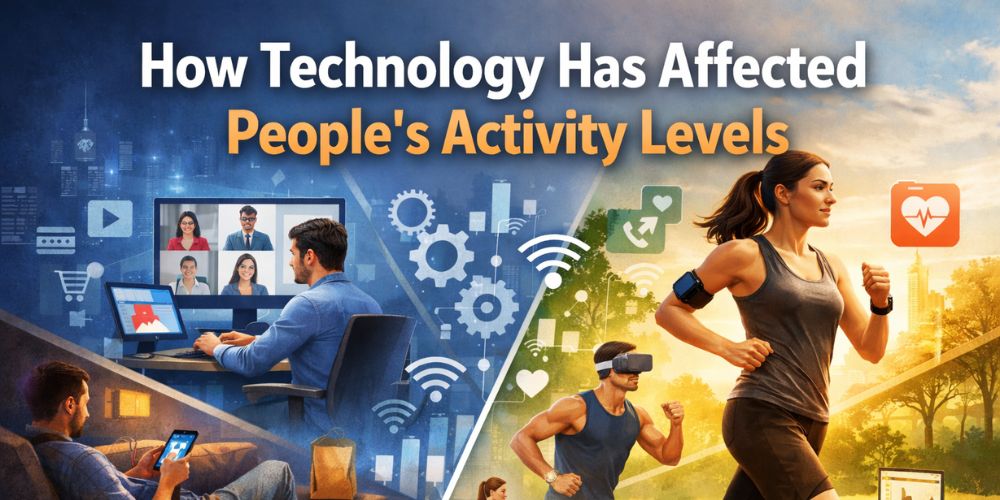
Technology has transformed almost every part of modern life. From how we work and communicate to how we shop, learn, and entertain ourselves. But one of the most significant changes has been its impact on people’s physical activity levels.
Over the past two decades, rapid advances in smartphones, automation, artificial intelligence, digital entertainment, and remote work technologies have reshaped daily routines. While technology has increased convenience and productivity, it has also contributed to more sedentary lifestyles.
Today many daily activities that once required movement can be completed with a few taps on a screen.
Understanding how technology affects activity levels is important for individuals, businesses, and policymakers — especially as digital adoption continues to accelerate in 2026 and beyond.
In this guide, we’ll break down:
- How technology has changed human activity patterns
- Positive and negative effects on physical movement
- Real-world examples of lifestyle changes
- Practical strategies to maintain healthy activity levels
- Future trends in technology and movement
What Does “Technology Affecting Activity Levels” Mean?
Definition
Technology affecting activity levels refers to the way digital tools, automation, and modern devices influence how much people move or remain physically active in their daily lives.
Activity levels typically include:
- Walking and physical movement
- Exercise and sports
- Occupational activity (movement at work)
- Household chores
- Daily transportation
Technology can increase convenience but often reduces the need for physical effort, which directly impacts how active people are.
In Simple Terms
Technology has made life easier.
But because many tasks can now be done digitally or automatically, people often move less than before.
For example:
- Online shopping replaces walking to stores
- Streaming services replace outdoor entertainment
- Desk jobs replace manual labor
- Food delivery replaces cooking or grocery trips
These small changes add up and influence overall daily activity levels.
Why This Topic Matters in 2026
Technology adoption has reached unprecedented levels.
Several major shifts are driving changes in human activity patterns:
1. Remote Work and Digital Offices
Cloud tools, video conferencing, and AI collaboration platforms allow millions of people to work from home.
While remote work offers flexibility, it also reduces:
- Commuting activity
- Walking between office spaces
- Physical interaction during work
Many remote workers spend 8–10 hours sitting daily.
2. Smartphone Dependency
Smartphones have become the center of modern life.
Common activities now done via phone include:
- Shopping
- Banking
- Communication
- Entertainment
- Navigation
This convenience often leads to extended screen time and reduced movement.
3. Automation and Smart Technology
Automation tools now handle tasks that previously required physical effort.
Examples include:
- Smart home devices
- Robot vacuum cleaners
- Automated manufacturing
- AI-powered assistants
While efficient, automation reduces everyday movement.
4. Digital Entertainment
Streaming services, gaming, and social media have replaced many traditional active leisure activities.
Examples:
- Video games instead of outdoor sports
- Streaming movies instead of social outings
- Social media scrolling instead of physical hobbies
As a result, leisure time is often sedentary rather than active.
Major Ways Technology Has Reduced Activity Levels
Technology affects activity levels across several areas of daily life.
Let’s examine the most significant ones.
1. Sedentary Work Environments
Many modern jobs are desk-based digital roles.
Common technology-driven professions include:
- Software development
- Digital marketing
- SEO and content creation
- Data analysis
- Customer support
- Online education
Workers in these roles spend large portions of their day sitting.
Real Example
A typical digital professional might:
- Sit during meetings (Zoom/Google Meet)
- Work on a laptop for 8-10 hours
- Communicate via Slack or email
Daily physical movement becomes minimal.
2. Reduced Transportation Activity
Technology has transformed how people travel.
Previously:
- People walked to local shops
- Used bicycles
- Took public transport that involved walking
Today many people rely on:
- Ride-hailing apps like uber
- Food delivery platforms like ubereat, zomato, etc.
- Online grocery services like walmart, flipkart, amazon, etc.
These services eliminate many small but important physical movements.
3. Online Shopping and E-Commerce
E-commerce platforms allow users to buy almost anything without leaving home.
While convenient, it reduces activity associated with:
- Walking through stores
- Carrying groceries
- Traveling to shopping centers
Instead, many purchases happen from a couch or desk.
4. Smart Home Automation
Modern homes include technology designed to reduce manual effort.
Examples include:
- Smart lighting systems
- Voice-controlled assistants
- Robot vacuum cleaners
- Automated thermostats
These technologies eliminate many physical tasks that previously required movement.
5. Digital Communication
Face-to-face interactions are increasingly replaced by digital communication.
Examples:
- Messaging apps
- Video calls
- Online collaboration platforms
Instead of walking to meet someone, people simply send a message.
Positive Effects of Technology on Activity Levels
Technology does not only reduce activity. In some cases, it can encourage physical movement.
Let’s explore the positive side.
1. Fitness Tracking Devices
Wearable technology has made health tracking easier.
Popular tools include:
- Smartwatches
- Fitness bands
- Health tracking apps
These devices monitor:
- Steps walked
- Calories burned
- Heart rate
- Exercise time
Many people become more active when they track progress.
2. Online Fitness Programs
Digital platforms now provide easy access to fitness training.
Examples include:
- Virtual workout classes
- Yoga apps
- Online personal trainers
- AI-driven fitness coaching
These tools allow users to exercise at home without needing a gym.
3. Gamified Physical Activity
Some technologies combine gaming with exercise.
Examples:
- Motion-based gaming systems
- VR fitness experiences
- Step-based challenge apps
These make physical activity more engaging and interactive.
4. Health Awareness Through Data
Technology provides constant health feedback.
Users can track:
- Sleep patterns
- Daily movement
- Fitness goals
- Body metrics
This awareness often motivates healthier behavior.
Framework: How Technology Influences Activity Levels
To understand the impact clearly, we can use a simple framework.
The Technology–Activity Impact Model
Technology affects activity through three main mechanisms:
1. Task Automation
Technology replaces physical effort.
Examples:
- Robot cleaners
- Automated manufacturing
- Smart assistants
Result: less physical effort required
2. Digital Substitution
Physical tasks are replaced with digital actions.
Examples:
- Online shopping
- Remote work
- Streaming entertainment
Result: movement replaced by screen time
3. Behavior Optimization
Technology encourages healthier behavior.
Examples:
- Fitness tracking
- Exercise apps
- Smart health monitoring
Result: increased awareness and motivation
Practical Steps to Maintain Healthy Activity Levels
Even in a technology-driven world, individuals can maintain healthy activity habits.
Here is a simple implementation checklist.
Daily Movement Checklist
✔ Take short walking breaks every hour
✔ Use standing desks when possible
✔ Walk during phone calls
✔ Track daily step goals
✔ Limit prolonged screen time
These small habits significantly increase daily activity.
Workplace Activity Strategies
Organizations can also encourage healthier movement.
Examples include:
- Standing meetings
- Walking discussions
- Ergonomic workspaces
- Wellness programs
- Movement reminders
These initiatives reduce sedentary behavior in digital workplaces.
Common Mistakes People Make
Despite awareness, many people still struggle with maintaining activity levels.
Here are common mistakes.
Ignoring Micro-Movements
Small movements throughout the day matter.
Examples:
- Walking between tasks
- Stretching regularly
- Standing instead of sitting
These micro-actions accumulate into meaningful activity.
Over-Reliance on Convenience Technology
Many people overuse convenience tools such as:
- Food delivery
- Ride services
- Automated household systems
While helpful, excessive reliance reduces daily movement.
Assuming Gym Time Is Enough
One hour at the gym does not offset 10 hours of sitting.
Daily movement matters more than occasional workouts.
Future Trends: Technology and Physical Activity
Technology will continue shaping human activity patterns.
Several trends are emerging.
AI-Powered Health Coaching
AI tools will increasingly provide personalized fitness guidance.
Examples:
- Smart wearables analyzing behavior
- AI workout recommendations
- Real-time health alerts
These systems will help individuals stay active.
Virtual Reality Fitness
VR technology is turning workouts into immersive experiences.
Users can participate in:
- Virtual sports
- Interactive workouts
- Global fitness competitions
This may increase engagement with exercise.
Smart Cities Encouraging Movement
Urban design combined with technology can promote activity.
Examples include:
- Smart cycling infrastructure
- Walkability analytics
- Public fitness tracking systems
Cities are beginning to integrate technology with public health.
Frequently Asked Questions (FAQ)
How has technology affected people’s activity levels?
Technology has generally reduced physical activity by replacing manual tasks with digital solutions. Automation, remote work, and online services allow people to perform many activities while sitting, which leads to more sedentary lifestyles.
Does technology always reduce physical activity?
No. While many technologies reduce movement, others promote fitness. Wearables, fitness apps, and virtual training programs encourage people to track exercise and stay active.
Why do smartphones reduce activity levels?
Smartphones provide instant access to entertainment, communication, and services. This convenience often leads to extended screen time and less physical movement during daily routines.
Can technology improve physical health?
Yes. Health technologies such as fitness trackers, smartwatches, and workout apps help people monitor their health and stay motivated to exercise regularly.
What are examples of technology reducing physical activity?
Common examples include:
- Online shopping instead of visiting stores
- Remote work instead of commuting
- Streaming entertainment replacing outdoor recreation
- Smart home devices replacing manual tasks
Conclusion: Explain How Technology Has Affected People’s Activity Levels
Technology has fundamentally reshaped how people live, work, and move.
While it has improved efficiency and convenience, it has also contributed to more sedentary lifestyles by reducing the need for physical effort in daily tasks.
However, technology itself is not the problem.
When used strategically, it can actually support healthier activity habits through fitness tracking, health monitoring, and digital coaching.
The key is balance.
Individuals, organizations, and cities must design systems that combine technological efficiency with human movement.
As digital innovation continues to evolve, maintaining healthy activity levels will become an important part of modern digital lifestyles.